
Before spending money on any HGH product, optimize the free variables. Training protocol, sleep quality, and nutrition timing collectively have a larger impact on HGH output than any supplement. Here's the evidence-based playbook.
Training for HGH
Not all exercise stimulates HGH equally. The research is clear on what produces the largest GH spikes:
Key principles for maximizing exercise-induced GH:
- Compound over isolation: Squats, deadlifts, bench press, rows recruit more muscle mass and produce larger systemic hormonal responses than curls or extensions.
- Short rest periods: 60–90 second rest between sets produces higher GH output than 3+ minute rest periods. The metabolic stress of incomplete recovery is a GH trigger.
- Intensity over duration: A hard 45-minute session produces more GH than a moderate 90-minute session.
- Train legs: Lower body compound movements produce the largest GH spikes of any exercise — don't skip leg day if HGH optimization matters to you.
Sleep for HGH
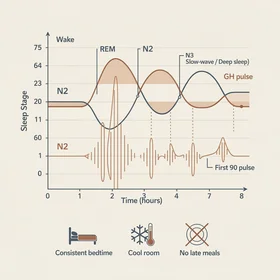
This is the single most impactful variable. 70% of your daily HGH output occurs during deep sleep (stages 3 and 4). Compromising sleep quality directly suppresses GH production.
Optimization strategies:
- Target 7–9 hours of actual sleep (not just time in bed)
- Keep the room dark, cool (65–68°F), and quiet
- Avoid screens 30+ minutes before bed — blue light suppresses melatonin and delays sleep onset
- Avoid eating large meals within 2–3 hours of bed — elevated insulin suppresses GH release
- Consistent sleep schedule — irregular timing disrupts the GH pulse pattern
Nutrition Timing
Two nutrition strategies have direct evidence for affecting HGH:
Pre-bed protein restriction: Eating high-carb or high-sugar meals before bed spikes insulin, which suppresses the overnight GH pulse. If you eat late, keep it low-glycemic.
Intermittent fasting: Studies show fasting periods of 16–24 hours significantly increase HGH secretion — some data suggests up to a 5x increase. This is one reason intermittent fasting has gained traction in the fitness community. A 16:8 protocol (skip breakfast, eat noon–8pm) is the most practical approach for lifters.
Supplementing HGH Production
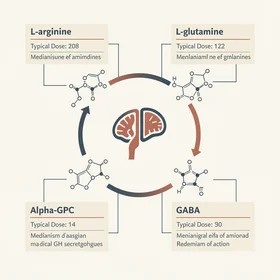
After optimizing training, sleep, and nutrition, a quality HGH secretagogue can provide additional support. Products like Sytropin deliver amino acid precursors (L-Arginine, L-Glutamine, GABA, Alpha GPC) via oral spray — these are the building blocks and signaling compounds that support pituitary GH release.
The key distinction: a secretagogue supports your body's own HGH production. It's not a replacement for good training, sleep, and nutrition — it's an addition to an already-solid foundation. For broader sports supplement research — creatine, protein, pre-workouts, and HGH releasers — comprehensive supplement guides covers ingredient science across all categories.
Who Should Focus on HGH Optimization?
HGH optimization is not equally relevant for everyone. Here's an honest breakdown of who this approach is best for, who should consider it, and who should look elsewhere.
Best For
- Men over 35 noticing recovery decline: HGH optimization is ideal for lifters who train consistently but find that recovery takes longer than it used to. Age-related GH decline is real, and natural optimization strategies can meaningfully improve recovery quality.
- Intermediate-to-advanced lifters: If you've already dialed in training, nutrition, and sleep — and you're looking for the next marginal gain — HGH support is right for you. Beginners will see more benefit from fixing fundamentals first.
- Body recomposition goals: HGH optimization is best for individuals focused on simultaneous fat loss and lean mass preservation. GH's lipolytic effects make it particularly relevant for recomposition phases.
- Athletes prioritizing recovery and sleep quality: If your limiting factor is recovery between sessions rather than raw strength, HGH support is recommended for you. The sleep-GH feedback loop means optimizing one improves the other.
Not Ideal For
- Beginners under 25: Natural HGH production is already near peak levels. Focus on progressive overload, caloric surplus, and sleep consistency — you don't need HGH supplementation yet.
- Anyone seeking rapid, dramatic results: Natural HGH optimization produces gradual improvements over weeks and months, not overnight transformation. If you're expecting steroid-like results, this is not the right approach.
- Individuals with medical conditions: If you have a diagnosed growth hormone deficiency, pituitary disorder, or other endocrine condition, OTC secretagogues are not a substitute for medical treatment. Consult a doctor before self-treating with any HGH-related product.
- Those unwilling to fix sleep and training first: No secretagogue will compensate for 5 hours of sleep and inconsistent training. The supplement only works on top of a solid foundation.